There are periods in our lives when we make decisions with far-reaching implications. Doing nothing is hardly an option, and a few fundamental choices must be made that establish a line of action for the years to come. Deciding what you would like to study, do for work, or explore in life are examples of these decisions, but an even more important one is deciding what sources of information you will trust, or at least consider, in learning about yourself and the world.
Early in my exploratory journey I came to the conclusion that everyone was at least a little bit correct in their assessment of the human condition, and I chose to value traditional forms of knowledge with roughly equal weighting to modern forms of exploration. These terms are a bit misleading and require some clarification to be meaningful. Another way to say it is that I chose to give roughly equal weighting to the findings of cyclotrons, microscopes and laser beams as to our ancestral or ancient forms of wisdom, including the modern variants of long-standing traditions that are embodied in present day spiritual teachers, as well as receivers of so-called channeled material. I didn’t decide any one thing was correct above all else, I decided to investigate them all and look for distillations of knowledge when dogma, convention, and cultural particulars were set aside.
My reasoning, though not consciously clear to me at the time, was rooted in my intuitions about the nature of our reality, as well as the sense that reason is only as good as its foundation, and the choice of foundation is not easily made based upon evidence. In fact, no evidence has any meaning until the choice of a foundation has been made. I think this was one of the most powerful and fortunate insights of my youth, and it led to one of the most important decisions of my adult life, which I will get to in a moment. First it is important that this assertion of mine be understood.
When something happens, and we take note of it, the next step in our conscious appraisal of things is to deduce what it was that actually happened. This may sound foolish, but let’s say our attention was drawn to the flash of a colored light. It’s simply not enough to say that a light flashed. We want to know why it flashed, what caused it to flash, and what it represents in relationship to our own well-being. If we’re driving in a car and the light is on the dashboard, then we can explain this intrusion of light into our world pretty easily with a high degree of certainty, but if we didn’t know what a car was—if we were transplanted from 100,000 B.C into an Aston Martin with a coolant temperature alarm—the way in which we would interpret that experience might be quite different. Or so I conjecture.
Taking this sort of issue to its extreme, then it is possible to see that an entire structure of logic and reason, such as the traditional shamanic practices of a South American tribe, or the body of art and practice we call physics, are simply not possible without axiomatic beginnings. Those axioms are not disprovable, and thus, in a sense, are arbitrary. Of course they are never really arbitrary; I would argue the axiomatic beginnings of a thought system are the most fundamental expression of who the operands of the thought system (us) believe themselves to be. We could also say that the axiomatic beginnings are ultimately statements of what the universe is, leaving us (seemingly) out of it for the moment, but this is for my purpose here completely equivalent. The most important point is that once this point of origin is established, a complete thought system with self-supporting chains of experience, evidence, and logic will follow.
The major decision of my adult life was to declare that the point of origin for my own thinking would leave in tact the possibility that the universe has an interior dimension—that knowledge itself was possibly fundamental to its own becoming. In doing so I admitted of the possibility that the wisdom contained in ancestral or traditional philosophies arose from genuine contact with this dimension, but I did not feel this required that the light on the dashboard of a car need be explained as anything but what it was. To be fair, what I ultimately declared was that the universe was more than a material system, at least in terms of what we understand material systems to be. I, too, was forced to assert a point of beginning. (In point of fact, there are no neutral points of beginning, which I think is significant…)
Now once you have a beginning, you must run some experiments to develop the thought system that arises from that beginning, and my early experiments led to fairly intense (for me) psychological difficulties. But in time I came to understand the sources of my confusion and one text that was most helpful in this regard was called A Course in Miracles—though of course it was not this stand-alone document that was helpful, but an entire dynamic of history, memory, thought, insight, conversation, meditation, grace and engagement with the ideas that it contained. I think the metaphysics described therein echoes the metaphysics of countless traditions, although the language is quite unique, and this weekend I came to an interesting conclusion.
What I realized is that the point of origin for what I would call the modern rational worldview, whose philosophical labels I’m not well-equipped to offer, but which would certainly include materialism, necessarily describes the condition from which many wisdom traditions suggest we must recover. To unpack that statement, I would say that the foundation of a materialist, rational worldview would be the idea that the universe is a self-contained causal structure consisting exclusively of localized energetic transformations. To make that even simpler: what we see is the product of what preceded it, and the causes of what we see are local. This means that what happens cannot be impacted by any cause that is physically distant from the event. (I cannot flip a switch in another galaxy in the same instant that something happens in this one, because the two points are too far away to be physically related.)
Let me turn to the other portion of my assertion. The condition from which many wisdom traditions suggest we must recover is the perception of separation—the view that we exist as fundamentally distinct beings, or to say it another way, as beings without any ultimate unification. Who and what I ultimately am is independent of who and what you ultimate are. To make this as clear as possible, we are separate bouncing balls on the gymnasium floor, not two fingers on a common hand. What the wisdom traditions would suggest is that this notion of separation is illusory, and that there truly is a universal now—a non-dimensional locus inclusive of all time and all space, of which we actively participate.
So, back to my claim, which is this: the assertion of local causality in modern physics, as powerful as it is, is not only a restatement of the axiomatic foundation on which the entire intellectual exercise of modern physics rests; it is also axiomatically equivalent to the premise that the universe is a collection of fundamentally separate entities—the very premise which traditional wisdom cultures argue is the root cause of suffering as manifest in our experience.
Why is this important? Well, I think it is important because a necessary outcome of the axiomatic assertion of separateness is that we live in a zero sum game. The two notions are concomitant. This is the bounding feature of our interactions, our policy debates, our relationships, our institutions and the fundamental manner in which we attempt to organize our world. I would even hypothesize that the world so many well-intentioned persons wish to participate in creating—a world that not only works for everyone, but doesn’t require unacceptable levels of sacrifice—is simply not possible in this environment.
This hypothesis of fundamental unity is tough to test, of course, because it cannot be evaluated in the context of the current paradigm, in which it can only be judged as insane. Yet what is sane or insane is deemed such, in any thought system, by comparing an idea’s accord with the very axioms on which the thought system is founded. Also, if the possibility exists, however slight it may seem, that even our best efforts are founded upon untenable foundations, and will not be capable of succeeding in the manner that we sincerely hope, it is worth a moment of sincere reflection.
At minimum, perhaps, the mere acknowledgment of such a possibility might temper the swiftness with which we judge who and what is “right” in our world. A healthy dose of uncertainty would do all of us some good, I think, and create the space for choosing compassion before we reach for the rhetorical guns.

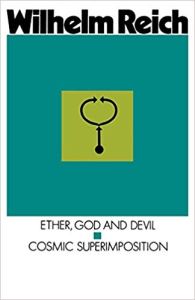 I read my first Wilhelm Reich book this winter, a combined volume that contained two short works entitled Ether, God and Devil and Cosmic Superimposition. Reich’s writing was thoughtful and I much enjoyed encountering his novel perspective on things. The experience left me thinking it would be fun to write a series of posts on the subject of genius. There are many thinkers and creators who have worked outside of established conventions, some of whom have enjoyed some popular success and many of whom have not, and I suspect there are countless inspired people we know precious little about. The ability to cultivate a penetrating insight, and also to possess the skill, talent and perseverance to introduce it to a world that doesn’t always know how to handle it, is exceedingly rare it seems.


 Embracing Forever